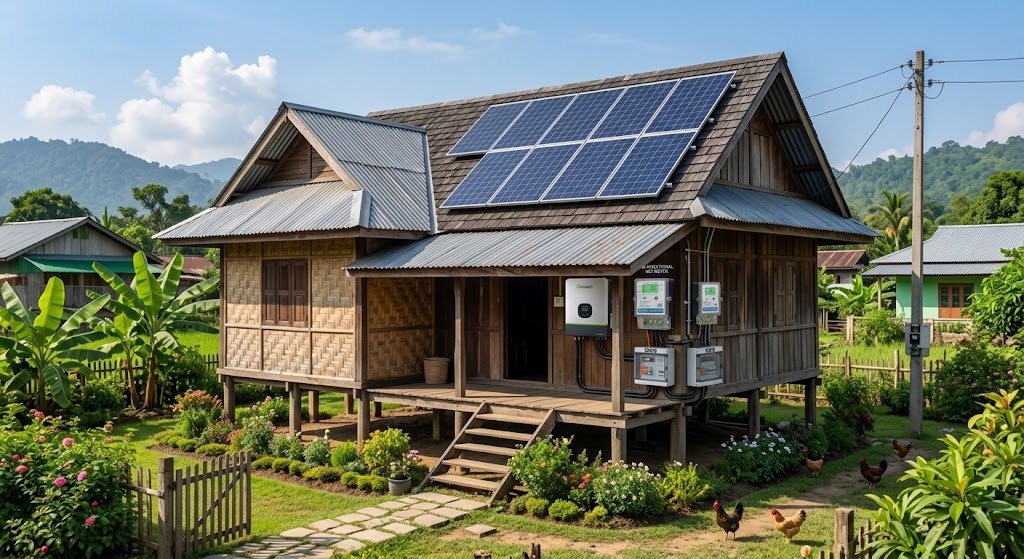
If you are planning to install solar panels at home, you may have heard terms like on-grid solar, off-grid solar, and hybrid solar. Among these, an on-grid solar system is one of the most popular choices for homes and businesses that already have an electricity connection.
An on-grid solar system allows you to generate electricity from sunlight and use it in your home while remaining connected to the electricity grid.
In this beginner’s guide, we will explain what an on-grid solar system is, how it works, its main components, advantages and disadvantages, and whether it may be suitable for your home.
What Is an On-Grid Solar System?
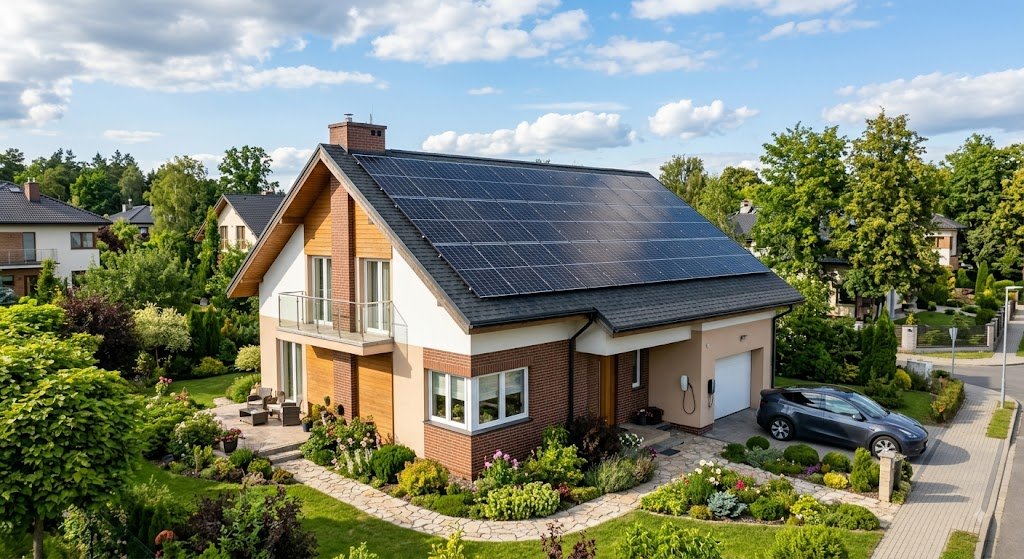
An on-grid solar system, also called a grid-tied solar system, is a solar power system connected directly to the electricity grid.
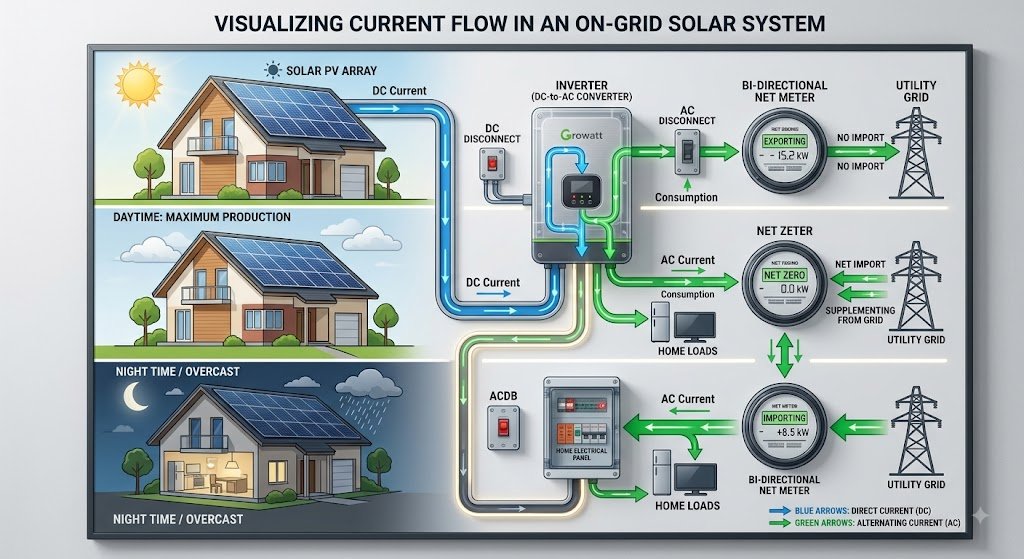
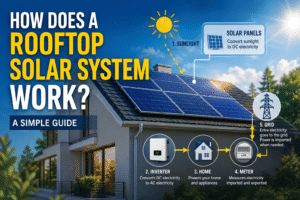
The solar panels generate electricity during the day. The electricity is converted into usable AC power by a solar inverter and supplied to your home.
If your solar panels produce more electricity than your home needs, the excess electricity can be exported to the electricity grid, depending on the applicable net-metering or other grid-interconnection arrangement.
When your solar generation is insufficient—for example, at night or during periods of low sunlight—you can draw electricity from the grid.
In simple terms:
Solar panels → Solar inverter → Home
and when required:
Electricity grid → Home
This makes an on-grid system different from an off-grid system, which normally requires batteries to provide electricity when solar generation is unavailable.
How Does an On-Grid Solar System Work?
The working principle of an on-grid solar system is actually quite simple.
1. Solar panels receive sunlight
Solar panels are made up of photovoltaic (PV) cells.
When sunlight falls on these cells, they generate DC (Direct Current) electricity.
The amount of electricity generated depends on several factors, including:
- Solar panel capacity
- Sunlight intensity
- Time of day
- Weather conditions
- Panel orientation and tilt
- Temperature
- Shading
- Dust and dirt on the panels
2. The inverter converts DC into AC
The electricity generated by solar panels is DC electricity.
Most appliances in our homes use AC (Alternating Current) electricity.
Therefore, the DC electricity passes through a grid-tied solar inverter, which converts it into AC electricity suitable for household use.
The inverter is one of the most important components of an on-grid solar system.
3. Your home uses the solar electricity
The generated electricity is supplied to your home’s electrical system.
For example, during a sunny afternoon, your solar system may be generating enough electricity to operate:
- Fans
- Lights
- Television
- Refrigerator
- Computer
- Water pump
- Air conditioner
- Other electrical appliances
The electricity generated by your solar system is generally used within your home before electricity needs to be imported from the grid.
4. Excess electricity can go to the grid
Suppose your solar system is generating 4 kW, but your home is using only 2 kW.
The remaining approximately 2 kW may be exported to the electricity grid, subject to the system’s configuration and your utility’s applicable rules.
This is where net metering or another approved grid-connected billing mechanism can become important.
5. You can draw electricity from the grid when needed
Solar panels don’t normally generate electricity at night.
Similarly, generation can fall significantly during cloudy or rainy weather.
When your solar generation is lower than your home’s electricity demand, the required electricity can be supplied by the grid.
For example:
Solar generation: 1 kW
Home consumption: 3 kW
Grid supply: approximately 2 kW
So an on-grid system allows solar power and grid electricity to work together.
Main Components of an On-Grid Solar System
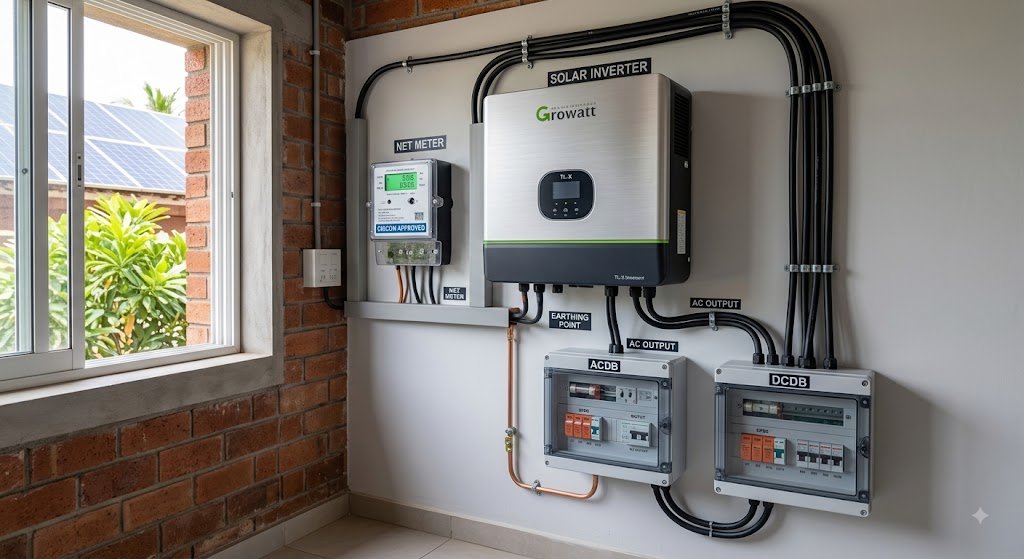
A typical residential on-grid solar installation consists of several important components.
1. Solar Panels
Solar panels are the primary electricity-generating component.
They convert sunlight into DC electricity using photovoltaic cells.
Residential systems commonly use panels with capacities such as:
- 400 W
- 450 W
- 500 W
- 550 W
The exact panel size and number depend on the required system capacity and available roof space.
For example, a system using 10 panels rated at 500 W each would have a total panel capacity of:
10 × 500 W = 5,000 W = 5 kW
2. Grid-Tied Solar Inverter
The inverter converts DC electricity from the solar panels into AC electricity.
A grid-tied inverter also synchronizes the solar system with the electricity grid.
Modern inverters may provide information such as:
- Solar generation
- Daily generation
- Monthly generation
- Grid voltage
- Power output
- System status
- Fault information
Some inverters also provide Wi-Fi or mobile-app monitoring.
3. Mounting Structure
Solar panels need to be securely installed on the roof or another suitable location.
The mounting structure:
- Holds the panels securely
- Provides the required tilt
- Helps maintain the correct orientation
- Protects against wind and environmental conditions
The structure should be properly designed for the installation location.
4. DC and AC Protection
Solar installations require appropriate electrical protection.
Depending on the system design, this can include equipment such as:
- DC isolators
- AC isolators
- Surge protection devices
- Circuit breakers
- Earthing arrangements
Proper protection is important for the safety of both the solar equipment and the building’s electrical system.
5. Electricity Meter
A grid-connected solar installation requires appropriate metering according to the local electricity distribution company’s requirements.
In a net-metering arrangement, the meter can record electricity imported from and exported to the grid.
This allows the electricity consumed and electricity supplied back to the grid to be accounted for according to the applicable billing rules.
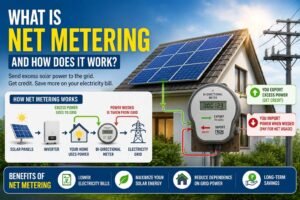
What Is Net Metering?
Net metering is one of the most important concepts to understand when discussing residential on-grid solar. Imagine your solar system generates electricity during the day. Sometimes your home may consume all of it.
At other times, your solar system may generate more electricity than your home is currently using. The surplus can be exported to the electricity grid when your installation is approved for such export. A bidirectional meter can measure electricity flowing in both directions.
For example:
During the day:
Solar → Home
Solar → Grid (surplus)
At night:
Grid → Home
The exact billing mechanism, eligibility, limits, and settlement rules vary by location and electricity distribution company, so homeowners should check the current rules applicable to their connection.
Does an On-Grid Solar System Need Batteries?
Normally, no.
This is one of the biggest differences between an on-grid and off-grid solar system.
A basic grid-tied solar system generally operates without a battery. Instead, it uses the electricity grid to balance the difference between solar generation and household consumption.
This can make an on-grid system simpler and less expensive than a comparable system that includes a large battery bank.
However, there is an important point that many beginners don’t know:
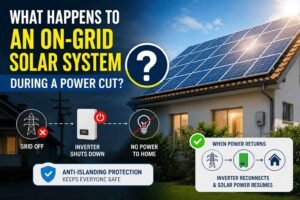
What Happens During a Power Cut?
A standard grid-tied solar inverter generally shuts down when the electricity grid fails.
Why?
Because the inverter must prevent electricity from being fed into a grid that utility workers may be repairing.
This safety mechanism is commonly known as anti-islanding protection.
Therefore:
Solar panels do not automatically mean your home will have electricity during a power cut.
If backup power during outages is important, you may need a suitable hybrid inverter, battery backup system, or other approved backup arrangement.
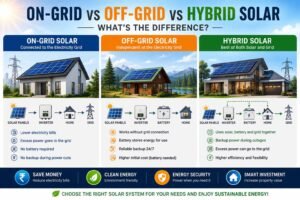
On-Grid vs Off-Grid vs Hybrid Solar
Understanding these three systems makes choosing a solar setup much easier.
| Feature | On-Grid | Off-Grid | Hybrid |
|---|---|---|---|
| Connected to electricity grid | Yes | Usually No | Yes |
| Solar panels | Yes | Yes | Yes |
| Battery required | Usually No | Yes | Usually Yes |
| Works during grid outage | Standard system: No | Yes | Yes, if designed for backup |
| Excess solar can be exported | Yes, where approved | No | Yes, where approved |
| Initial cost | Generally lower | Generally higher | Generally higher |
| Suitable for | Homes with reliable grid connection | Locations without grid | Homes wanting solar + backup |
Advantages of an On-Grid Solar System
There are several reasons why homeowners choose grid-connected solar.
1. Lower Electricity Bills
One of the biggest advantages is the potential reduction in electricity purchased from the grid.
The electricity generated by your solar panels can offset part of your normal consumption.
The actual savings depend on factors such as:
- System size
- Electricity consumption
- Solar generation
- Electricity tariff
- Self-consumption
- Export compensation or billing mechanism
- Local regulations
2. No Large Battery Bank Required
Since the electricity grid can supply power when solar generation is insufficient, a typical on-grid system does not require a large battery bank.
This can reduce:
- Initial installation cost
- Battery maintenance requirements
- Battery replacement expenses
3. Good Use of Rooftop Space
A rooftop that receives sufficient sunlight can be used to generate electricity without requiring additional land.
For homeowners with suitable roofs, this can be an effective way to utilize otherwise unused space.
4. Potential to Export Surplus Electricity
When the system is approved for grid export, excess electricity can be supplied to the grid.
The financial benefit depends on the applicable electricity policy and billing mechanism.
5. Reduced Dependence on Grid Electricity
Even though the system remains connected to the grid, generating your own electricity can reduce your dependence on electricity purchased from the utility.
Disadvantages of an On-Grid Solar System
On-grid solar isn’t perfect for every situation.
1. Standard Systems Don’t Provide Backup During Power Cuts
This is probably the most important disadvantage.
If the grid goes down, a standard grid-tied inverter normally stops supplying electricity.
So you cannot assume that solar panels alone will keep your lights and fans running during a power cut.
2. Solar Generation Depends on Sunlight
Solar panels generate electricity mainly during daylight.
Generation can also decrease because of:
- Clouds
- Rain
- Shading
- Dust
- Poor orientation
- High temperatures
- Other environmental conditions
3. Initial Installation Cost
Although solar can reduce electricity expenses over time, purchasing panels, an inverter, mounting structures, protection equipment and installation services requires an initial investment.
4. Roof Space Is Required
A larger solar system requires more suitable roof area.
The roof should also be structurally suitable and have sufficient sunlight exposure.
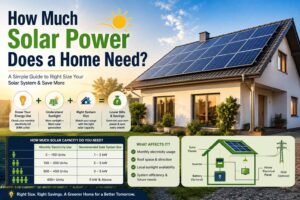
How Many Solar Panels Do You Need?
The number of panels depends on the total system capacity and the wattage of each panel.
For example, if you want a 3 kW system and use 500 W panels:
3,000 W ÷ 500 W = 6 panels
For a 5 kW system:
5,000 W ÷ 500 W = 10 panels
For a 10 kW system:
10,000 W ÷ 500 W = 20 panels
These are simple capacity calculations. Actual system design also needs to consider inverter specifications, panel characteristics, roof layout, shading, electrical design and local installation requirements.
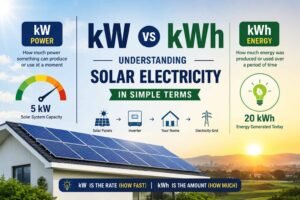
How Much Electricity Can a Solar System Generate?
Solar generation is not simply:
System capacity × 24 hours
A 5 kW solar system does not generate 120 kWh every day.
Solar panels generate electricity only when sufficient sunlight is available, and their output changes throughout the day.
For example, generation may look roughly like this:
Morning → Low generation
Midday → Higher generation
Afternoon → Generation decreases
Night → No solar generation
The actual daily generation depends on your location, season, weather, system orientation, shading, equipment efficiency and other factors.
Therefore, when estimating solar generation, it is better to use local solar irradiation data and actual system performance rather than relying on a simple fixed number.
Is an On-Grid Solar System Worth It?
For many homes and businesses that have:
- A suitable roof
- Good sunlight exposure
- Regular electricity consumption
- A grid connection
- Long-term plans to stay at the property
an on-grid solar system can be an attractive option.
However, the financial benefit should be calculated based on your actual electricity consumption and local electricity tariffs.
Before installing a system, consider:
Electricity consumption + available roof area + solar potential + system cost + applicable electricity regulations
rather than choosing a system size simply because it is popular.
Things to Check Before Installing On-Grid Solar
Before investing in a solar system, check the following:
1. Your monthly electricity consumption
Look at several months of electricity bills rather than just one bill.
2. Your rooftop
Check:
- Available area
- Shading
- Roof condition
- Orientation
- Structural suitability
3. Your electricity connection
Check the requirements of your local distribution utility for grid-connected solar.
4. Net-metering or applicable billing rules
Don’t assume that every solar installation automatically receives the same export or billing treatment.
5. Installer quality
Choose an experienced installer and verify the equipment specifications and warranty terms.
6. Inverter quality
The inverter is a critical part of the system, so pay attention to its specifications, efficiency, warranty and service support.
7. Future electricity consumption
If you plan to install additional air conditioners, an electric vehicle, water heater or other high-power appliances, consider your future requirements before finalizing the system size.
Frequently Asked Questions
Can an on-grid solar system work without electricity from the grid?
A standard grid-tied system generally cannot operate normally when the grid is unavailable. Its inverter normally shuts down for safety.
A properly designed hybrid/backup system can provide electricity during outages.
Does an on-grid solar system require a battery?
Usually, no.
The electricity grid effectively provides the backup supply when solar generation is insufficient.
Can solar panels generate electricity at night?
No. Solar panels require sunlight to generate electricity.
At night, an on-grid home normally draws electricity from the grid unless another source, such as a battery system, is available.
What happens to extra solar electricity?
If your system is approved for grid export, surplus electricity can be sent to the electricity grid and accounted for under the applicable billing mechanism.
Is an on-grid system better than an off-grid system?
It depends on your requirements.
If you already have a reliable grid connection and your main objective is reducing electricity costs, an on-grid system may be suitable.
If you need electricity even when there is no grid connection, an off-grid or appropriately designed hybrid system may be more suitable.
Conclusion
An on-grid solar system is essentially a way to generate your own electricity while remaining connected to the electricity grid.
The basic concept is simple:
Sunlight → Solar Panels → Inverter → Home
When solar generation is insufficient:
Electricity Grid → Home
And when approved and configured for export:
Excess Solar → Electricity Grid
The biggest advantage is that you can generate electricity from sunlight without necessarily needing a large battery system. The biggest limitation is that a standard grid-tied system normally does not provide backup electricity during a grid outage.
If you are considering installing solar at your home, understanding these fundamentals is the first step. In the next articles in this Solar Technology series, we can go deeper into topics such as solar panel capacity, inverter sizing, net metering, electricity bill calculations, solar generation, and how to calculate the payback period of a rooftop solar system.
2 thoughts on “What Is an On-Grid Solar System? A Beginner’s Complete Guide”