Solar energy is becoming increasingly popular among homeowners, businesses, schools, and other organizations. One of the easiest ways to use solar energy is by installing a rooftop solar system.
But how does a rooftop solar system actually work?
You may see solar panels installed on a roof, but there is much more happening behind the scenes. Solar panels generate electricity from sunlight, an inverter converts that electricity into a form your appliances can use, and the system can work together with the electricity grid.
In this beginner-friendly guide, we will explain how a rooftop solar system works, its major components, how electricity flows through the system, what happens to excess electricity, and what happens during a power cut.
What Is a Rooftop Solar System?
A rooftop solar system is a solar power system installed on the roof of a house, office, commercial building, school, factory, or other suitable structure.
The system uses solar photovoltaic (PV) panels to convert sunlight into electricity.
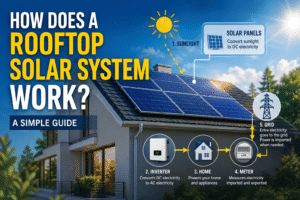
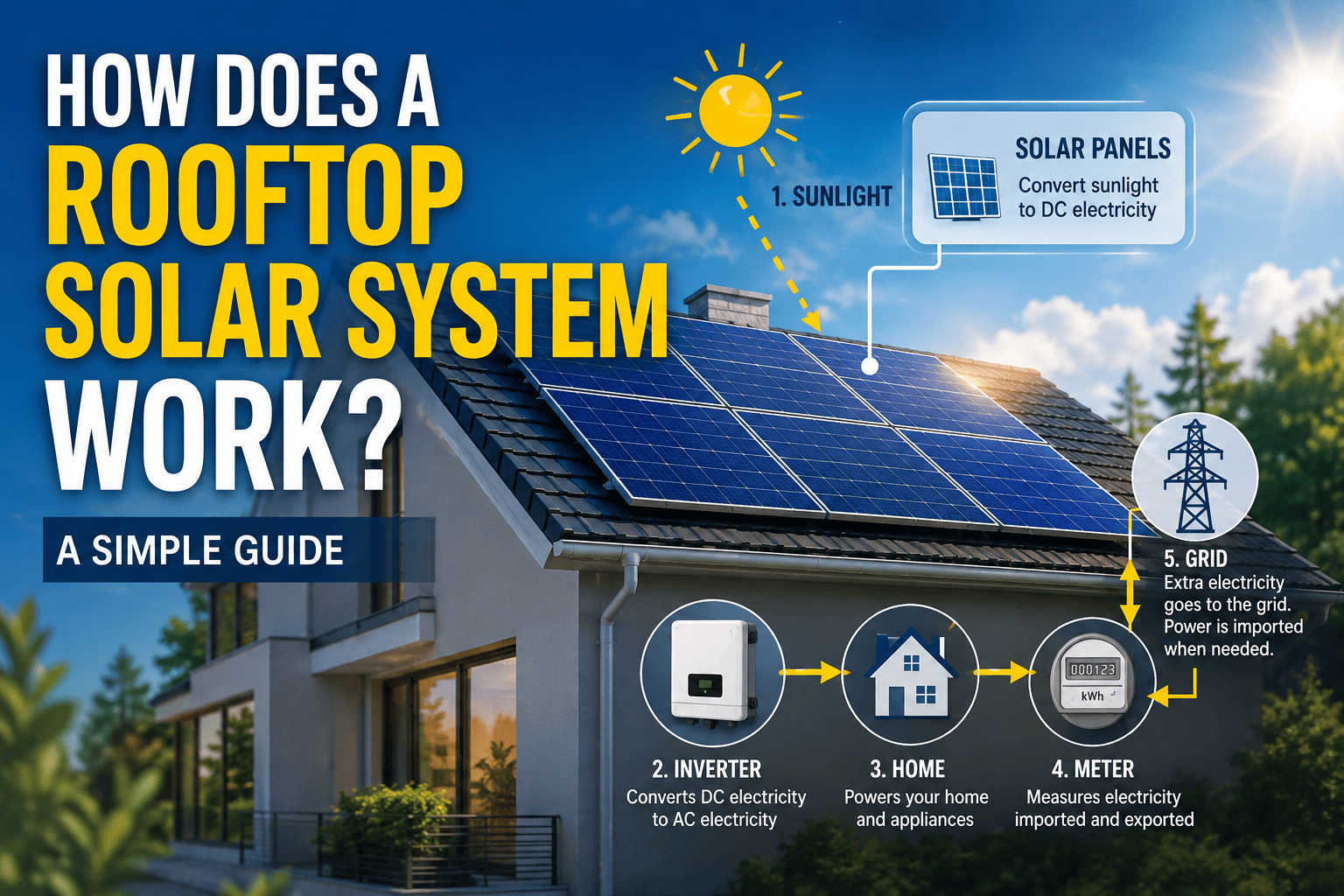
A typical grid-connected rooftop solar system works like this:
Sunlight → Solar Panels → DC Electricity → Solar Inverter → AC Electricity → Home/Building
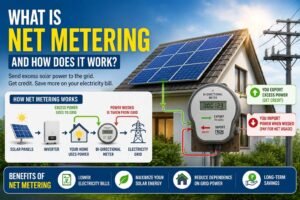
If the solar system produces more electricity than the building is using, the surplus may be exported to the electricity grid if the installation is approved for grid export.
When solar generation is insufficient, electricity can be imported from the grid.
How Does a Rooftop Solar System Work?
The working process can be divided into several simple steps.
Step 1: Solar Panels Capture Sunlight
The process begins when sunlight reaches the solar panels installed on the roof.
Solar panels contain many photovoltaic cells. These cells are generally made from semiconductor materials such as silicon.
When sunlight strikes the photovoltaic cells, it causes electrons to move, producing electrical energy.
The electricity produced by the panels is DC (Direct Current).
For example, if several solar panels are connected together, they can generate a significant amount of DC electricity during sunny conditions.
Step 2: Solar Panels Generate DC Electricity
Solar panels don’t directly produce the same type of electricity that most household appliances use.
They generate DC electricity.
The amount of electricity generated changes throughout the day.
Typically:
Morning → Low generation
Late morning → Increasing generation
Around midday → Higher generation
Afternoon → Decreasing generation
Night → No solar generation
Generation is also affected by weather, shading, panel orientation, temperature, dust and other factors.
Step 3: DC Electricity Goes to the Solar Inverter
The DC electricity generated by the solar panels is sent to the solar inverter.
The inverter is one of the most important components of a rooftop solar system.
Its primary job is to convert:
DC → AC
AC stands for Alternating Current, which is the type of electricity normally used by household and commercial electrical appliances.
Modern solar inverters can also perform several other functions, including system monitoring, electrical protection and synchronization with the electricity grid.
Step 4: The Inverter Supplies Electricity to Your Home
After converting the electricity from DC to AC, the inverter supplies it to the building’s electrical system.
Your appliances can then use the electricity generated by the solar panels.
For example, during the day, solar electricity may power:
- Fans
- Lights
- Computers
- Refrigerators
- Televisions
- Water pumps
- Air conditioners
- Other electrical equipment
The actual amount of solar electricity available depends on the solar system’s output at that moment.
What Happens If Solar Generation Is More Than Your Consumption?
This is an important part of a grid-connected rooftop solar system.
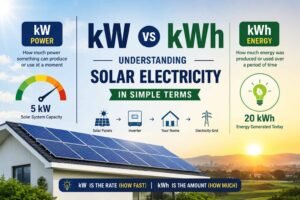
Suppose your solar system is producing 4 kW, but your home is currently consuming only 2 kW.
The remaining electricity may be exported to the electricity grid if your system is configured and approved for grid export.
The simplified flow becomes:
Solar Panels → Inverter → Home
and the surplus:
Solar Panels → Inverter → Electricity Grid
The exact treatment of exported electricity depends on the applicable electricity regulations and billing arrangement.
What Happens If Your Home Needs More Electricity Than the Solar System Produces?
Now consider the opposite situation.
Suppose your solar system is producing 2 kW, while your home is consuming 4 kW.
The solar system supplies approximately 2 kW, and the remaining approximately 2 kW can come from the electricity grid.
The flow becomes:
Solar → Home
plus:
Grid → Home
This is one of the major advantages of an on-grid rooftop solar system: the grid can supplement solar generation when necessary.
What Happens at Night?
Solar panels require sunlight to generate electricity.
Therefore, a normal rooftop solar system doesn’t generate electricity at night.
For a grid-connected system, electricity can be supplied from the grid after the sun goes down.
For example:
Daytime:
Solar → Home
Excess Solar → Grid
Night:
Grid → Home
If the system includes batteries, stored energy can also be used depending on the system design.
Main Components of a Rooftop Solar System
A rooftop solar installation contains several components that work together.
1. Solar Panels
Solar panels are responsible for converting sunlight into DC electricity.
The total capacity of the system depends on the number and wattage of the panels.
For example:
10 panels × 500 W = 5,000 W = 5 kW
2. Solar Inverter
The inverter converts DC electricity from the panels into AC electricity.
Depending on the type of system, the inverter may also:
- Synchronize with the grid
- Monitor solar generation
- Provide electrical protection
- Detect faults
- Provide performance data
3. Mounting Structure
Solar panels need a strong mounting structure to keep them securely attached to the roof.
The mounting system also helps position the panels at an appropriate orientation and tilt.
A properly designed structure is important for long-term safety and durability.
4. DC Protection Equipment
The DC side of a solar installation may include appropriate protection and isolation equipment.
Depending on the system design, this can include:
- DC isolators
- Fuses
- Surge protection devices
- DC cables and connectors
5. AC Protection Equipment
The AC side can include equipment such as:
- AC isolators
- Circuit breakers
- Surge protection
- Distribution equipment
The exact equipment required depends on the system design and applicable electrical standards.
6. Solar Meter / Bidirectional Meter
Grid-connected rooftop solar installations may use appropriate metering equipment to measure electricity imported from and exported to the grid.
Where net metering is applicable, a bidirectional meter can record electricity flowing in both directions.
Simple Rooftop Solar System Diagram
The basic electricity flow can be understood like this:
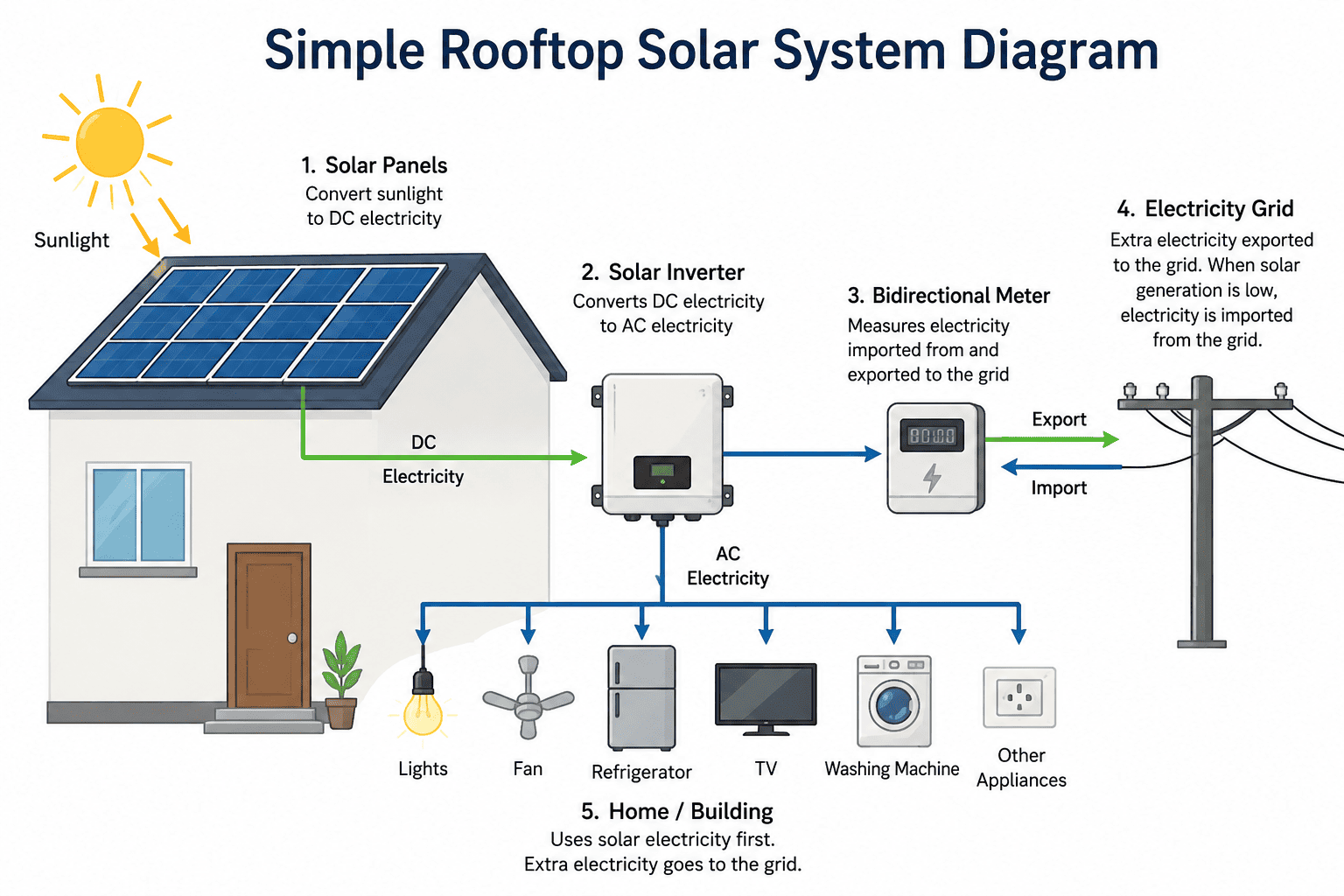
Electricity Grid Electrical Appliances
When solar production exceeds consumption, surplus electricity can flow toward the grid where grid export is permitted.
What Is the Role of the Solar Inverter?
Many beginners think solar panels are the main component because they are the most visible part of the system.
However, the inverter is equally important.
The inverter performs the critical job of converting the DC electricity generated by the solar panels into AC electricity.
A grid-connected inverter also has to synchronize with the electrical grid.
Many modern inverters provide monitoring through:
- Mobile applications
- Web dashboards
- Wi-Fi
- Ethernet
- Local displays
This allows users to monitor how much electricity their solar system is generating.
What Happens During a Power Cut?
This is one of the most frequently misunderstood aspects of rooftop solar.
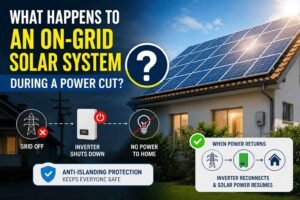
A standard grid-connected rooftop solar system normally shuts down when the electricity grid goes off.
This is a safety feature known as anti-islanding protection.
Why is this necessary?
Imagine electricity workers are repairing a power line that they believe has been disconnected from the electricity supply.
If rooftop solar systems continued feeding electricity into that line, it could create a dangerous situation.
Therefore, a normal grid-tied inverter is designed to stop operating when the grid is unavailable.
Important:
Solar panels + normal grid-tied inverter ≠ backup power during a power cut
If you want your solar system to continue supplying selected appliances during an outage, you generally need a suitable battery-backed or hybrid system designed for backup operation.
Rooftop Solar With Battery Backup
A battery can store electricity generated by the solar panels.
A simplified system looks like:
Solar Panels → Inverter → Battery / Home
During the day, surplus solar energy can be stored in the battery, depending on the system design.
During a power outage, the battery can supply electricity to designated loads through an appropriate backup system.
This type of arrangement can provide greater energy independence but generally costs more than a basic grid-connected system.
How Much Electricity Can a Rooftop Solar System Generate?
The answer depends on several factors.
A 5 kW rooftop solar system does not produce 5 kWh every hour throughout the day.
Its output changes continuously depending on sunlight conditions.
Factors affecting solar generation include:
- Solar system capacity
- Location
- Season
- Weather
- Roof orientation
- Panel tilt
- Shading
- Dust
- Panel temperature
- Inverter efficiency
- System losses
Therefore, solar generation should ideally be estimated using local solar conditions and the specific system design.
Example: How Electricity Flows in a Home
Imagine a house with a 5 kW rooftop solar system.
During a sunny afternoon:
Solar generation: 4 kW
Home consumption: 2.5 kW
Approximately:
2.5 kW → Home
and the remaining:
1.5 kW → Grid
Later in the evening:
Solar generation: 0 kW
Home consumption: 2 kW
The electricity can then come from:
2 kW → Grid → Home
This illustrates how a grid-connected rooftop solar system can work alongside the electricity grid.
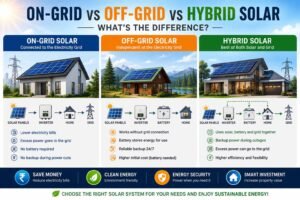
On-Grid Rooftop Solar vs Off-Grid Solar
Rooftop solar can be designed in different ways.
| Feature | On-Grid Rooftop Solar | Off-Grid Solar |
|---|---|---|
| Electricity grid connection | Yes | Usually No |
| Solar panels | Yes | Yes |
| Battery | Usually not required | Required |
| Export electricity | Possible where approved | No |
| Normal operation during grid outage | No | Yes |
| Initial cost | Generally lower | Generally higher |
| Main purpose | Reduce grid electricity consumption | Provide independent electricity |
There is also a hybrid solar system, which combines grid connectivity with battery storage and backup capability.
Click here to read details about the On Grid Solar System.
Benefits of Rooftop Solar
Installing solar panels on a suitable rooftop can provide several benefits.
Lower electricity purchases
Solar generation can reduce the amount of electricity purchased from the grid.
Better use of roof space
Instead of leaving a suitable roof unused, it can be used to generate electricity.
Reduced dependence on conventional electricity
Generating electricity locally can reduce dependence on electricity supplied entirely from the grid.
Potential grid export
Approved systems may be able to export surplus electricity to the grid.
Long-term energy investment
Solar panels can generate electricity for many years when properly installed and maintained.
Things That Can Reduce Solar Generation
Not every rooftop solar system produces the same amount of electricity.
Several factors can reduce output.
Shading
Trees, buildings, water tanks, walls and other structures can cast shadows on the panels.
Even partial shading can affect system performance depending on the panel and system configuration.
Dust and Dirt
Dust accumulating on solar panels can reduce the amount of sunlight reaching the photovoltaic cells.
Periodic cleaning may therefore be useful, particularly in dusty environments.
Poor Orientation
Panels should be positioned appropriately for the location and system design.
High Temperature
Solar panel electrical output can decrease as panel temperature rises.
Weather
Cloudy and rainy conditions can reduce solar generation.
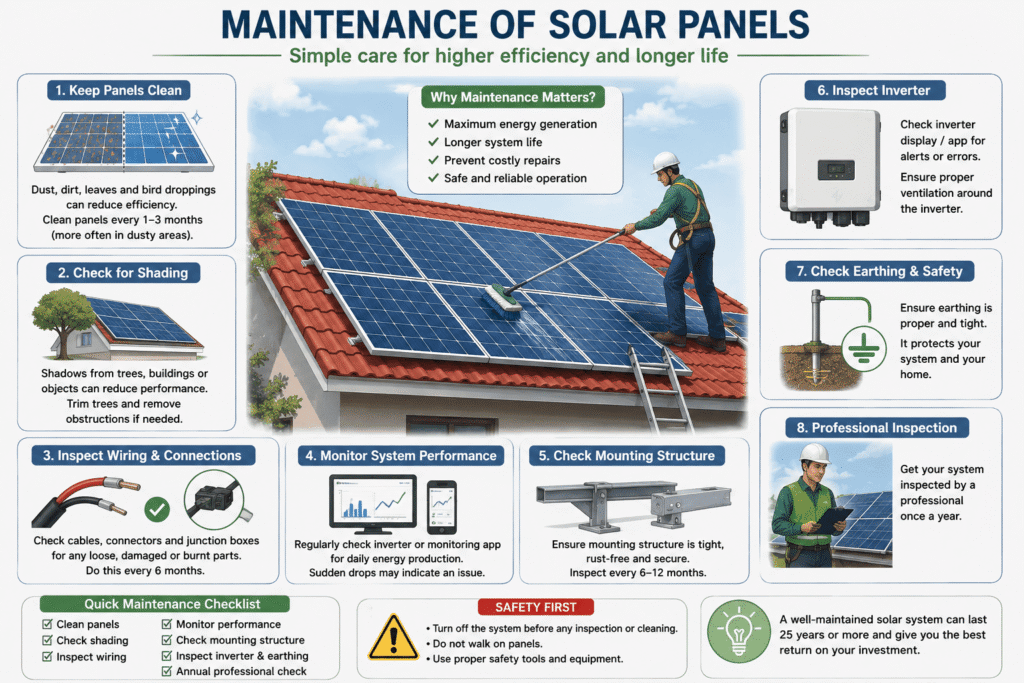
How to Maintain a Rooftop Solar System
Solar systems generally require relatively little routine maintenance, but they should not simply be ignored after installation.
Useful maintenance practices include:
Keep panels reasonably clean
Remove accumulated dust, dirt and other deposits using appropriate cleaning methods.
Check for shading
Trees can grow over time and begin shading panels that were previously unshaded.
Monitor inverter performance
Check the inverter display or monitoring application for unusual warnings or reduced production.
Inspect electrical connections
Electrical inspections should be performed by qualified personnel according to the system requirements.
Check mounting structures
The mounting structure should be inspected periodically for signs of corrosion, looseness or damage.
Is Rooftop Solar Suitable for Every Home?
Not necessarily.
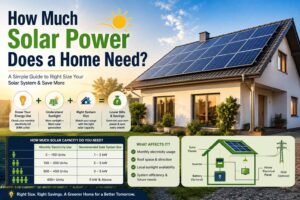
Before installing a rooftop solar system, consider:
- Available roof area
- Sunlight exposure
- Shading
- Roof condition
- Structural suitability
- Electricity consumption
- Local electricity regulations
- Available budget
- Future electricity requirements
A professional solar installer can assess the site and recommend an appropriate system size.
Frequently Asked Questions
Does rooftop solar work on cloudy days?
Yes. Solar panels can generate electricity from available daylight even when the sky is cloudy, but generation is generally lower than during strong sunlight.
Can rooftop solar work at night?
Solar panels do not generate electricity without sunlight. At night, a grid-connected system normally draws electricity from the grid, while a battery-backed system can use stored energy.
Do rooftop solar panels work during a power cut?
A standard grid-tied system normally shuts down during a grid outage. A properly designed battery or hybrid backup system can provide electricity during an outage.
Do I need a battery for rooftop solar?
Not necessarily. A basic on-grid rooftop solar system normally operates without batteries.
Can excess solar electricity be sold to the grid?
Where grid export and the applicable billing mechanism are approved, surplus electricity may be exported to the grid. The exact rules depend on the local electricity distribution utility and current regulations.
How long do solar panels last?
Solar panels are designed for long-term operation, often with performance warranties extending for decades. Actual lifespan and output depend on panel quality, installation conditions, environment and maintenance.
Conclusion
A rooftop solar system is essentially a small electricity-generation plant installed on your roof.
The basic process is:
Sunlight → Solar Panels → DC Electricity → Inverter → AC Electricity → Home
If the solar system produces more electricity than the building is consuming, the surplus may be exported to the electricity grid where permitted.
When solar generation is insufficient, electricity can be supplied by the grid.
The most important thing to remember is that a standard on-grid rooftop solar system is not automatically a backup power system. During a grid outage, the inverter normally shuts down for safety. Battery-backed or hybrid systems are required when backup power is needed.
As solar technology continues to become more accessible, understanding how the system works can help homeowners make better decisions about system size, equipment, installation and electricity savings.