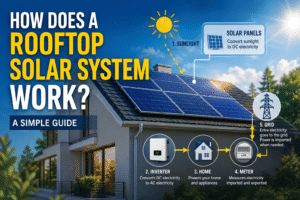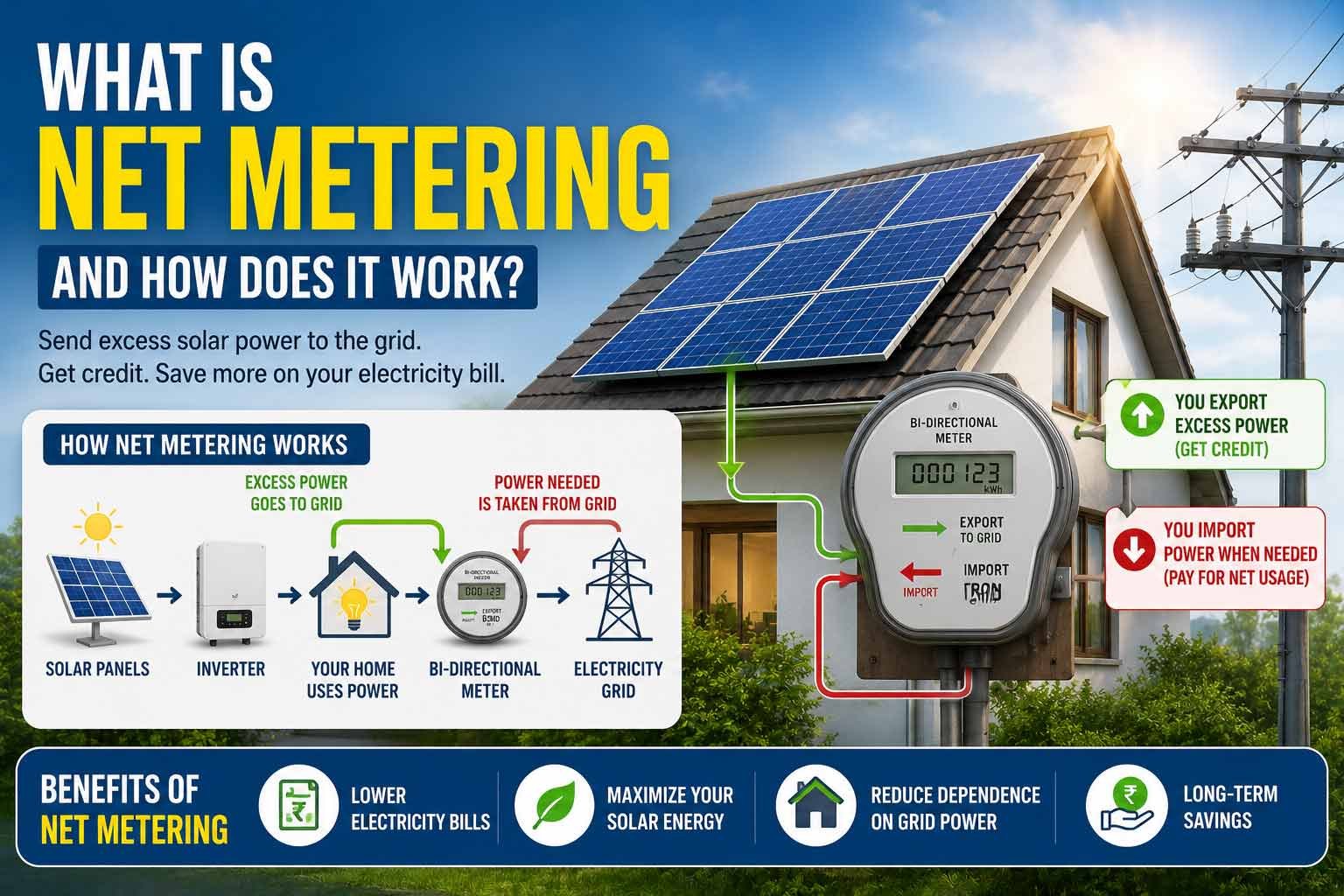
If you are thinking about installing a rooftop solar system, you have probably heard the term net metering.
But what exactly is net metering?
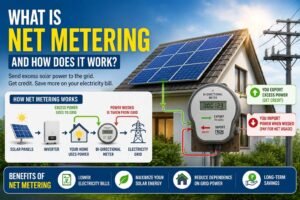
In simple terms, net metering allows a solar-powered home to send excess electricity back to the electricity grid and receive credit for the exported energy, according to the applicable electricity regulations and billing arrangement.
This is one of the most important concepts to understand when installing an on-grid solar system.
In this article, we will explain what net metering is, how it works, how electricity flows between your home, solar panels, and the grid, and how it can reduce your electricity bill.
What Is Net Metering?
Net metering is a system that measures the electricity you:
- Import from the electricity grid, and
- Export to the electricity grid from your solar system.
Instead of using two separate meters for these activities, a suitable bidirectional meter can record electricity flowing in both directions.
Think of the electricity grid as a large energy network.
When your solar panels produce more electricity than your home needs, the extra electricity can flow from your home to the grid.
When your home needs more electricity than your solar panels are producing, electricity flows from the grid to your home.
The meter records both directions.
How Does Net Metering Work?
A typical rooftop solar system works something like this:
Solar Panels → Solar Inverter → Home Appliances
But when the system is connected to the electricity grid, there is another path:
Solar Panels → Inverter → Home + Electricity Grid
The direction of electricity depends on how much solar energy your home is using at that moment.
During the Day
Suppose your solar panels are producing 5 kW.
Your home is currently using 3 kW.
That means:
5 kW solar generation − 3 kW home consumption = 2 kW surplus
The extra 2 kW can be exported to the electricity grid, subject to your system and applicable regulations.
What Happens When Solar Generation Is Less Than Your Home’s Demand?
Now imagine your solar panels are producing 2 kW, but your home appliances are consuming 4 kW.
You have a shortage of:
4 kW − 2 kW = 2 kW
The remaining 2 kW is supplied by the electricity grid.
So your home can simultaneously use:
Solar power + Grid power
to meet its electricity demand.
What Happens at Night?
At night, your solar panels normally don’t generate electricity.
Therefore, your home gets its electricity from the grid.
For example:
Solar generation = 0 kWh
Home consumption = 5 kWh
The required 5 kWh is imported from the electricity grid.
The bidirectional meter records this imported electricity.
A Simple Example of Net Metering
Let’s understand the concept using monthly electricity units.
Suppose during one month:
Electricity consumed from the grid
You imported:
250 units
Electricity exported to the grid
Your solar system exported:
150 units
Your net energy difference would be:
250 − 150 = 100 units
Under a net-metering arrangement where imported and exported energy are offset on the applicable basis, the energy component of the bill may therefore be based on the net amount, subject to the local tariff, charges, rules, and billing structure.
So instead of paying for all 250 imported units without considering your solar export, your solar generation can significantly reduce your net electricity consumption.
Important: Actual electricity bills can include fixed charges, taxes, duties, demand charges, minimum charges, or other components that are not necessarily eliminated by solar export credits.
How Electricity Flows in a Net-Metered Solar System
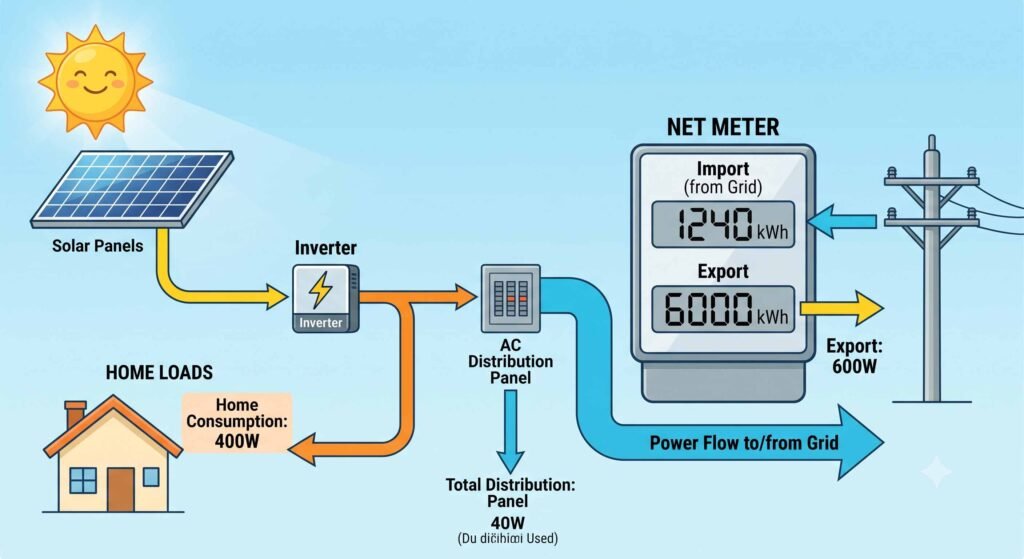
A simple way to visualize the system is:
Solar Panels – > Solar Inverter – > Your Home -> Bidirectional Meter -> Electricity Grid
(AI Generated Image)
The electricity can flow in either direction depending on the difference between solar generation and household consumption.
What Is a Bidirectional Meter?
A bidirectional meter is an electricity meter capable of measuring energy flowing in both directions.
It generally records:
Import
Electricity coming from the grid to your home.
Export
Electricity going from your solar system/home to the grid.
This is different from a conventional meter that primarily records electricity consumption from the grid.
The exact meter type, data fields, and billing mechanism depend on the local electricity distribution utility.
Net Metering vs a Normal Electricity Meter
| Feature | Normal Meter | Bidirectional Meter |
|---|---|---|
| Measures grid consumption | Yes | Yes |
| Measures solar export | No | Yes |
| Electricity can flow both ways | Usually not relevant | Yes |
| Used with rooftop solar | Not normally sufficient | Commonly used |
| Records import/export separately | No | Yes |
Why Is Net Metering Important for Rooftop Solar?
Solar panels don’t always produce electricity at the exact time you need it.
For example, your solar system may produce the most electricity around midday.
But many households may consume more electricity in the:
- Morning
- Evening
- Night
Without a way to use or account for surplus generation, some of the electricity produced by your solar system could otherwise go unused.
Net metering allows surplus electricity to be exported to the grid under the applicable regulatory framework.
The grid effectively acts as a place where surplus energy can be sent while you remain connected to the electricity network.
A Real-Life Example
Imagine you have a 3 kW rooftop solar system.
During a sunny afternoon:
- Solar generation = 3 kW
- Home consumption = 1 kW
- Surplus = 2 kW
That surplus can be exported to the grid.
Later in the evening:
- Solar generation = 0 kW
- Home consumption = 2 kW
- Grid supplies = 2 kW
So throughout the day, electricity may flow in both directions.
During Solar Surplus
Home → Grid
During Solar Shortage
Grid → Home
The bidirectional meter keeps track of the energy flow.
Does Net Metering Mean You Get Free Electricity?
Not exactly.
This is a common misunderstanding.
Net metering can substantially reduce the energy-related portion of your electricity bill, but it does not necessarily mean your entire electricity bill becomes zero.
Depending on the local tariff and regulations, your bill may still contain:
- Fixed charges
- Meter charges
- Taxes
- Duties
- Service charges
- Demand charges, where applicable
- Other regulatory charges
Therefore, even if your solar system generates a large amount of electricity, you may still receive an electricity bill.
Does Net Metering Work During a Power Cut?
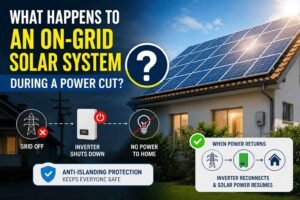
No—not in the sense of continuing normal grid-connected solar operation.
A standard on-grid solar inverter is designed to shut down when the utility grid goes off because of anti-islanding protection.
Therefore:
Grid available → Solar system operates normally
Grid unavailable → Grid-tied inverter shuts down
This means net metering does not provide backup electricity during a power outage.
If you want your solar system to continue supplying electricity during a power cut, you generally need a backup-capable hybrid system and suitable battery storage or another properly designed backup arrangement.
You can learn more about this in our previous article:
What Happens to an On-Grid Solar System During a Power Cut?
Is Net Metering the Same as Selling Electricity?
Not necessarily.
People often say:
“I am selling electricity to the electricity company.”
That is an oversimplification.
In a net-metering arrangement, exported electricity is generally credited or accounted for under the applicable regulatory and billing mechanism.
The exact treatment of exported energy depends on the rules of your electricity distribution utility and the applicable state or national regulations.
Different mechanisms can exist, including:
- Net metering
- Gross metering
- Net billing
- Other renewable-energy settlement mechanisms
So it is important to check the current rules applicable to your location before installing a solar system.
Net Metering vs Gross Metering
These two terms are often confused.
Net Metering
Your imported and exported electricity are measured, and the applicable billing mechanism accounts for both.
The focus is on the net energy balance or applicable credits.
Gross Metering
The solar electricity exported to the grid is measured separately, and the electricity generated/exported may be compensated according to the applicable tariff or purchase arrangement.
The exact rules vary by jurisdiction.
What Happens If You Generate More Electricity Than You Consume?
Suppose your solar system exports more electricity than you import during a billing period.
What happens next depends on the local electricity regulations and the specific metering arrangement.
Possible mechanisms can include:
- Carrying forward energy credits
- Settlement at a specified rate
- Periodic adjustment
- Other utility-defined treatment
Therefore, you should not assume that every unit of surplus solar electricity will automatically result in a cash payment.
Always check the current rules of your electricity distribution company.
How Does Net Metering Help Reduce Electricity Bills?
Let’s consider a simple example.
Suppose your home consumes:
400 units per month
Your rooftop solar system exports:
250 units
If your applicable net-metering arrangement allows these quantities to be offset on the relevant basis, the net energy requirement could be:
400 − 250 = 150 units
This can significantly reduce the energy portion of your electricity bill.
However, the final bill will depend on the applicable tariff and other charges.
Does the Solar Inverter Connect Directly to the Meter?
The solar inverter is connected to the home’s electrical distribution system through appropriate protection equipment.
A simplified arrangement is:
Solar Panels
↓
Solar Inverter
↓
AC Protection / Distribution
↓
Home Loads
↕
Bidirectional Meter
↕
Electricity Grid
The actual installation contains additional safety and protection equipment and must comply with the requirements of the electricity distribution utility and applicable electrical standards.
What Is the Role of the Electricity Grid?
The grid plays an important role in a grid-connected solar system.
During the day, the grid can receive surplus solar electricity.
When solar generation is insufficient, the grid supplies the difference.
This means you don’t necessarily need to generate exactly the same amount of electricity that your home is consuming at every moment.
For many rooftop solar systems, the grid provides the flexibility needed to balance generation and consumption.
Does a Solar Battery Affect Net Metering?
Yes, a battery can change how electricity flows through the system.
For example, surplus solar electricity can potentially be used to:
- Power your appliances
- Charge the battery
- Export electricity to the grid
The exact operating behavior depends on the inverter, battery system, configuration, and applicable regulations.
A battery can therefore help you use more of your own solar energy instead of exporting all surplus generation.
Is Net Metering Available Everywhere?
The availability and rules of net metering depend on the location and electricity distribution utility.
Rules can change over time.
They may specify requirements related to:
- Maximum system capacity
- Consumer category
- Metering equipment
- Interconnection approval
- Application process
- Technical standards
- Export limits
- Billing and settlement
- Applicable tariffs
If you are planning a rooftop solar installation, check the latest rules from your local electricity distribution utility rather than relying on an old article or information from another state.
What Should You Check Before Installing Solar?
If you are planning an on-grid rooftop solar system, ask your installer or electricity distribution utility about:
- Whether net metering is available
- Maximum permitted solar capacity
- Required application documents
- Bidirectional meter requirements
- Grid connection requirements
- Applicable charges
- Current electricity tariff
- Export/credit rules
- Approval and inspection process
These details can have a significant effect on the economics of your solar installation.
Frequently Asked Questions
What is net metering in solar?
Net metering is a system that accounts for electricity imported from the grid and electricity exported to the grid from a rooftop solar system, according to the applicable regulations and billing arrangement.
Does net metering reduce electricity bills?
Yes, it can significantly reduce the energy-related portion of an electricity bill by accounting for eligible solar electricity exported to the grid.
Can I earn money from net metering?
Not necessarily. The treatment of surplus electricity depends on the applicable regulations and metering mechanism. Net metering should not automatically be interpreted as a cash payment for every exported unit.
Does net metering work during a power cut?
No. A standard grid-connected solar inverter normally shuts down during a grid outage because of anti-islanding protection.
Do I need a special meter for rooftop solar?
A suitable bidirectional meter is generally required for grid-connected solar arrangements where import and export energy must be measured.
Can I install solar without net metering?
The possibilities depend on your local regulations and system type. If you are considering an on-grid system, check with your electricity distribution utility about the available metering arrangements.
Conclusion
Net metering is one of the key technologies that makes rooftop on-grid solar attractive for many homeowners.
Instead of using all solar electricity immediately, your system can supply your home first and export surplus electricity to the grid when permitted.
Later, when your solar system is producing less electricity than your home requires, you can draw electricity from the grid.
In simple terms:
Solar produces more than your home needs → Surplus goes to the grid
Solar produces less than your home needs → Electricity comes from the grid
Bidirectional meter → Records the energy flowing in both directions
The exact financial benefit depends on your electricity consumption, solar generation, tariff, system size, and the current rules of your local electricity distribution utility.
If you’re planning to install rooftop solar, understanding net metering before installation can help you make a much better decision.