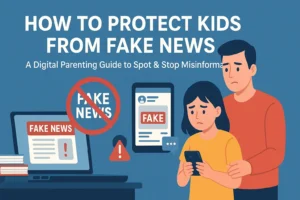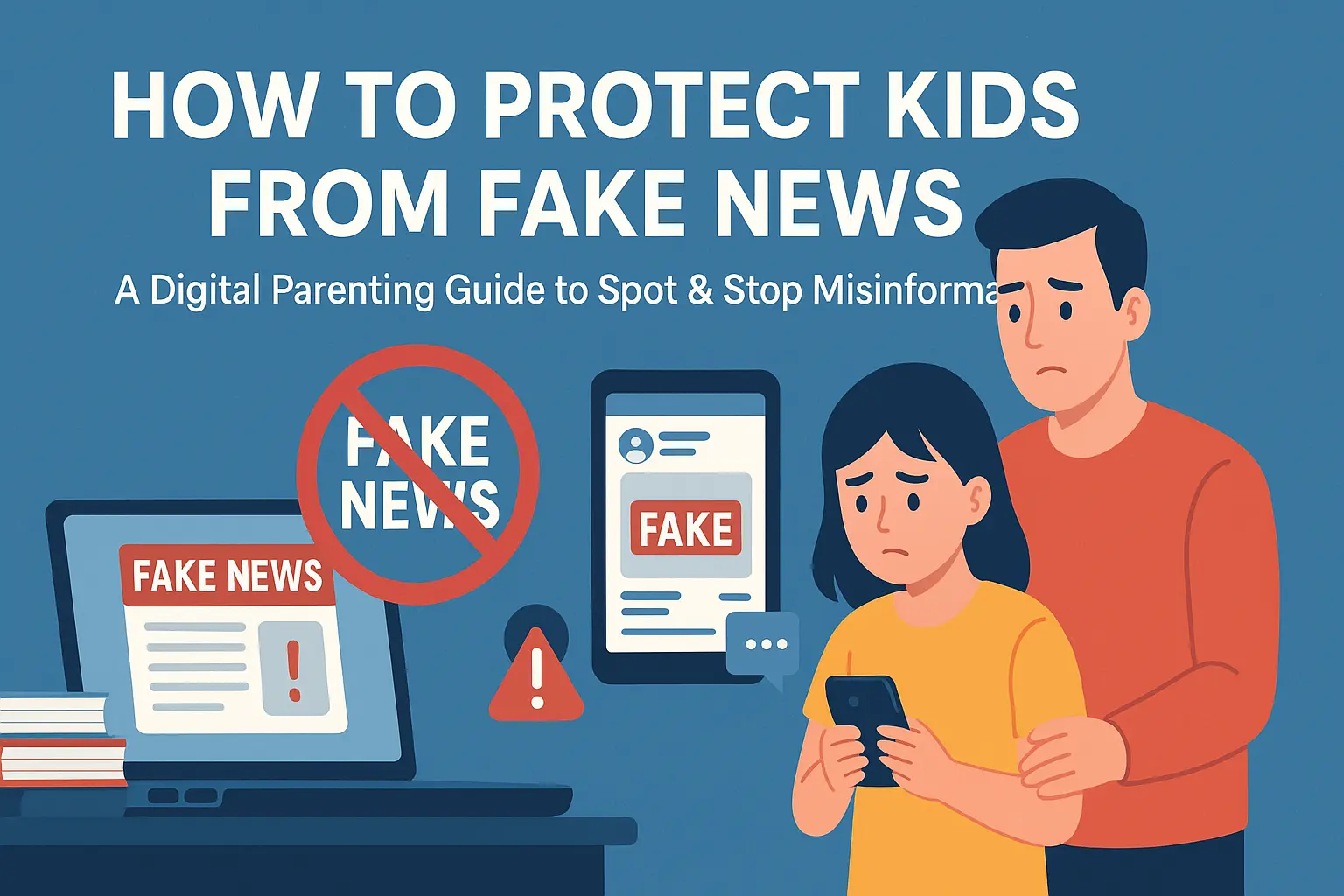
In today’s digital world, information travels at lightning speed. This has many benefits, but it also comes with a serious drawback—fake news. Misleading or false information can influence opinions, create panic, and even harm communities. For parents, the challenge is even bigger: children and teenagers are exposed to endless streams of online content without always knowing how to judge what’s real and what’s not.
The Impact of Fake News on Families and Children
Fake news is more than just an online nuisance—it directly affects how young people learn, think, and make decisions.
- Confusion and misinformation: Kids may believe false health, education, or career advice.
- Fear and anxiety: Sensational fake stories often spread panic, leaving children worried about safety.
- Loss of trust: Continuous exposure to fake stories can make teens suspicious of all news—even the reliable ones.
- Divisive thinking: False information can create conflicts among peer groups, communities, and even families.
Mediums Through Which Fake News Spreads
Parents should understand the channels where children most often encounter fake news:
- Social Media Platforms
- Facebook, Instagram, Twitter (X), and WhatsApp are leading sources of misinformation.
- Children tend to believe what is repeatedly shared by friends or influencers.
- Messaging Apps
- WhatsApp and Telegram groups often circulate edited images, fake quotes, and misleading videos.
- “Forwarded messages” are particularly dangerous because they come from people kids already trust.
- YouTube and Video Platforms
- Videos are highly persuasive—children may assume that anything in video format is authentic.
- Deepfake videos make it even harder to tell the difference between real and fake.
- News Websites & Blogs
- Not all websites follow journalistic standards. Many use clickbait headlines to gain traffic, spreading false or exaggerated stories.
- Memes and Viral Images
- Fake news is often hidden in funny or emotional memes that children share without realizing the underlying falsehood.
- Search Engines
- Kids searching for quick answers may land on unverified sites, mistaking them for credible sources.
How Parents Can Guide Children to Detect Fake News
Parents play a vital role in helping kids build digital literacy and learn how to separate fact from fiction. Some strategies include:
- Teach children to question sources
- Encourage them to ask: Who is publishing this? Can I trust this source?
- Promote cross-checking
- Show them how to look for the same news across multiple trusted outlets.
- Explain emotional triggers
- Help kids understand that fake news often tries to make people angry, scared, or excited so they share it quickly.
- Use family discussions
- Talk about current news stories together. This builds critical thinking and helps children see how to evaluate information.
- Introduce fact-checking tools
- Teach them to use platforms like Alt News, Snopes, or FactCheck.org before believing or sharing content.
- Set digital rules
- Guide children not to forward unverified news, no matter how interesting it sounds.
Conclusion
Filtering fake news is a serious challenge of the modern era, especially for families raising children in the digital world. While technology companies and media organizations are trying to fight misinformation, parents remain the first line of defense. By teaching kids to question, verify, and think critically, we can reduce the harmful impact of fake news and raise responsible digital citizens.