Introduction
The internet offers endless opportunities for learning, creativity, and fun. But for children, the online world also comes with hidden dangers. From hurtful messages to strangers trying to gain their trust, young users can easily fall victim if not guided properly.
In this article, we’ll explore three major online threats children face — cyberbullying, grooming, and scams — with real-world examples, and provide practical tips for parents to safeguard their kids.
1. Cyberbullying
What it is:
Cyberbullying happens when someone uses digital platforms — like social media, chat apps, or gaming communities — to harass, humiliate, or threaten another person. Unlike traditional bullying, it can happen 24/7 and spread quickly.
Example:
A 12-year-old girl in India faced constant mocking on Instagram when classmates made fake accounts to post edited pictures of her. The hurtful content was shared widely, leading her to stop going to school.
Signs Your Child May Be Experiencing It:
- Sudden withdrawal from online activities they used to enjoy.
- Emotional distress after using a phone or computer.
- Reluctance to talk about online interactions.
Prevention Tips for Parents:
- Encourage open communication about online experiences.
- Teach children how to block and report abusive users.
- Monitor social media privacy settings.
2. Online Grooming
What it is:
Grooming is when an adult builds an emotional connection with a child to exploit them, often for sexual purposes. It usually starts with friendly chats but can escalate to manipulation and requests for personal information.
Example:
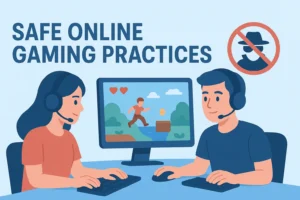
In 2023, police in the UK arrested a man who posed as a teenage gamer on Roblox to befriend and manipulate several children, convincing them to share personal photos.
Warning Signs:
- Spending excessive time online at unusual hours.
- Receiving gifts or money from an unknown source.
- Secretive behavior about online friendships.
Prevention Tips for Parents:
- Keep communication devices in shared spaces.
- Educate children about never sharing personal details or photos with strangers.
- Use parental controls to limit chat features in games.
3. Online Scams
What it is:
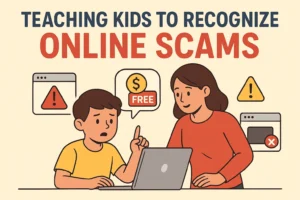
Scammers target children by tricking them into giving away personal information or money. Common tactics include fake contests, free gift offers, or phishing messages pretending to be from popular platforms.
Example:
A boy in the U.S. received a message in a gaming app claiming he had “won free coins” and needed to log in via a special link. The link stole his account details, leading to unauthorized purchases.
How to Spot a Scam:
- Messages asking for personal or financial details.
- Too-good-to-be-true offers.
- Links from unknown senders.
Prevention Tips for Parents:
- Teach children to verify offers with an adult before clicking any links.
- Enable two-factor authentication on all accounts.
- Regularly review transaction history for suspicious activity.
Conclusion
The digital world can be a safe place for children — if they know how to navigate it wisely. By understanding the threats of cyberbullying, grooming, and scams, parents can take proactive steps to protect their kids.
The key is awareness, open conversation, and proper use of online safety tools.
✅ Parent’s Action Plan:
- Talk to your children regularly about their online life.
- Stay informed about the platforms they use.
- Use a combination of education, monitoring, and trust to keep them safe.