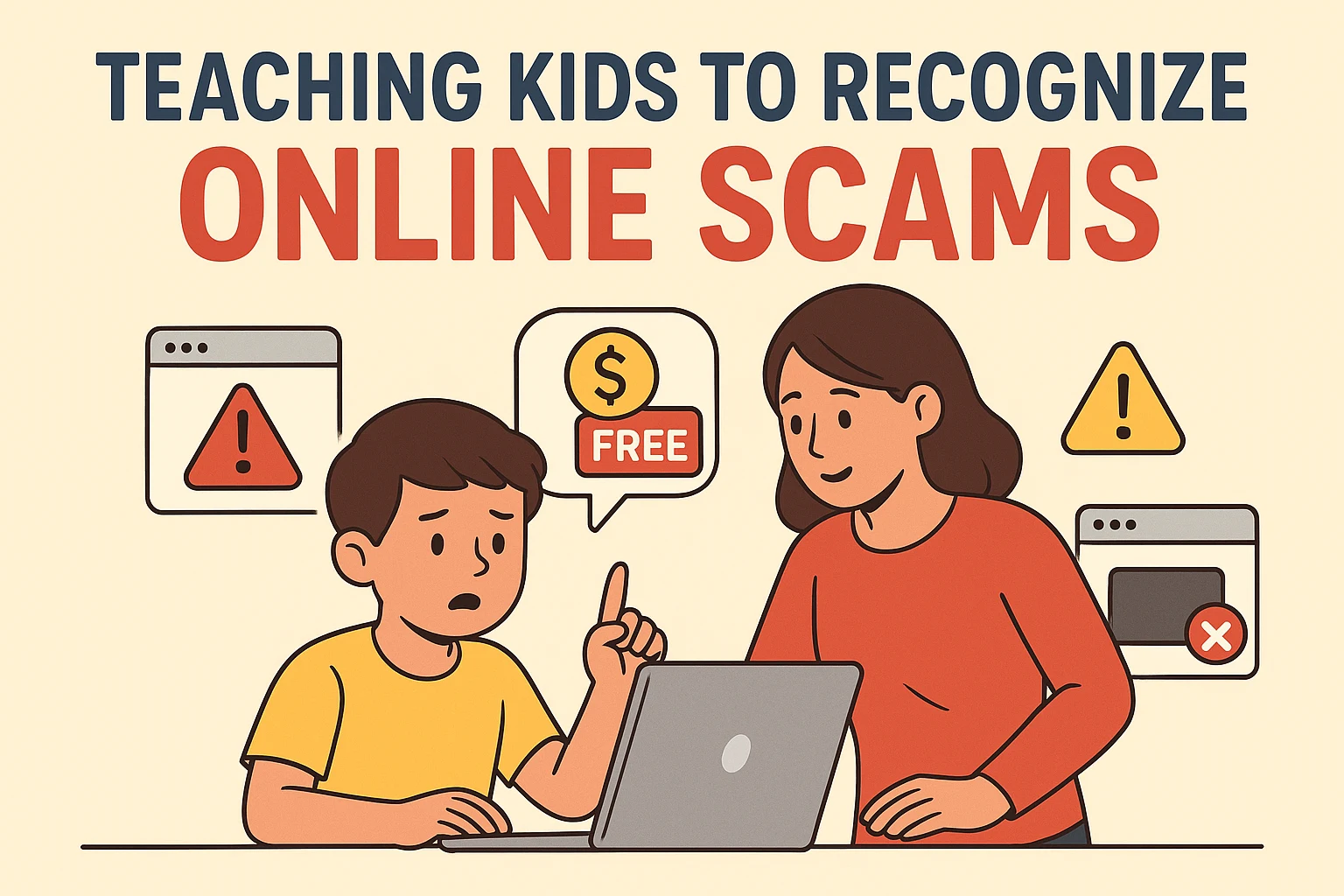
In today’s digital age, children are growing up surrounded by smartphones, tablets, and computers. While technology offers amazing opportunities for learning and entertainment, it also brings certain risks. One of the biggest threats kids face online is online scams. These scams are no longer just emails from strangers; they now appear in games, social media, websites, and even messaging apps.
For parents, teaching kids to recognize and avoid these scams has become an essential part of digital parenting. Let’s explore the risks, common types of scams, and effective strategies to guide children in building safe online habits.
Why Online Scam Awareness Is Important for Kids
Children are curious, trusting, and often eager to explore. Unfortunately, scammers take advantage of these qualities. Kids might:
- Click on suspicious links because they look exciting or colorful.
- Share personal information without realizing the consequences.
- Download harmful files disguised as games, music, or apps.
- Fall for fake rewards or offers like “Free game coins” or “Win a new phone.”
These mistakes can lead to identity theft, exposure to harmful content, or financial loss if parents’ payment details are connected to accounts.
Common Online Scams Kids Encounter
Understanding what scams look like is the first step in protecting kids. Here are some common examples:
- Phishing Messages
Fake emails, texts, or pop-ups asking for login details, passwords, or financial information. - Fake Gaming Rewards
Pop-ups or links claiming to offer free coins, skins, or upgrades, but they steal account information. - Clickbait Ads
Bright, flashy ads promising prizes like “You’re the lucky winner!” which lead to scam websites. - Social Media Traps
Fake profiles pretending to be friends, celebrities, or influencers, asking kids to click links or share details. - Malware Downloads
Files disguised as free games, music, or software that infect the device with viruses.
How Parents Can Teach Scam Awareness
1. Start with Open Conversations
Explain in simple language what scams are. Use real-life comparisons, like a stranger tricking someone into giving away their lunch, to make kids understand.
2. Teach the Golden Rule: “Don’t Trust Everything Online”
Encourage children to be cautious. If something looks too good to be true, it probably is.
3. Show Examples of Scams
Sit with your child and look at fake emails, suspicious ads, or scam pop-ups. Point out red flags such as:
- Poor grammar or spelling.
- Strange email addresses.
- Urgent messages like “Hurry! Act now.”
4. Encourage Asking Before Clicking
Teach kids to pause before clicking links, downloading files, or sharing information. Let them know they can always ask you if they’re unsure.
5. Practice Strong Digital Hygiene
- Use secure passwords and explain why not to share them.
- Install antivirus software and parental controls.
- Keep apps and games updated from trusted sources only.
Role of Parents in Guiding Online Safety
- Be approachable: Kids should feel safe telling you if they encounter something suspicious. Avoid scolding them for mistakes; instead, use it as a learning moment.
- Set rules together: Create family guidelines about online time, downloads, and information sharing.
- Stay updated: Learn about the latest scams so you can warn your kids in advance.
Red Flags Kids Should Watch Out For
Teach children to recognize these warning signs:
- Messages asking for personal or family details.
- Offers that seem “too good to be true.”
- Pop-ups asking to download unknown apps.
- Friends suddenly sending strange links.
- Games or websites asking for passwords outside official login pages.
Encouraging children to trust their instincts is important. If something feels odd, it’s better to avoid it.
Practical Tips to Empower Kids
- Role-playing activities: Pretend to be a scammer and test if your child can spot the trick.
- Storytelling: Share age-appropriate stories about kids who avoided scams.
- Positive reinforcement: Praise them when they identify and avoid suspicious content.
Final Thoughts
Online scams are becoming more sophisticated, but with proper guidance, kids can learn to recognize and avoid them. As parents, your role is to educate, guide, and stay involved in their digital journey. By teaching scam awareness early, you empower your children to enjoy the internet safely while building critical thinking skills that will protect them throughout their lives.
Digital parenting isn’t about limiting technology—it’s about preparing kids to navigate the online world wisely.