Social media has become an inseparable part of our lives. From staying connected with friends and family to networking for professional growth, platforms like Facebook, Instagram, Twitter (X), Snapchat, and LinkedIn play a big role in shaping how we communicate and share. However, along with the benefits come risks like identity theft, cyberbullying, misinformation, stalking, and privacy breaches.
Both teenagers and adults need to be mindful of how they use social media. Practicing safe habits online is essential to protect personal information, mental health, and digital reputation.
Why Social Media Safety Matters
- Teenagers are vulnerable to cyberbullying, peer pressure, and online grooming.
- Adults face risks like scams, phishing, job-related reputation damage, and data leaks.
- Once posted, content can be permanent and misused.
- Oversharing personal details can make you a target for criminals.
Safe Social Media Practices
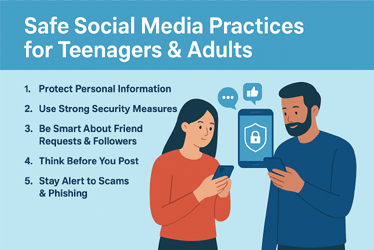
1. Protect Personal Information
- Avoid posting details like home address, phone number, school/office name, or daily routine.
- Use strong privacy settings to control who can see your posts and photos.
- Think twice before sharing vacation details in real-time.
2. Use Strong Security Measures
- Enable two-factor authentication (2FA) on all accounts.
- Create strong, unique passwords and use a password manager.
- Regularly log out from public or shared devices.
3. Be Smart About Friend Requests & Followers
- Don’t accept requests from strangers.
- Verify profiles before connecting, as fake accounts are common.
- Teach teenagers to consult parents before connecting with unknown people.
4. Think Before You Post
- Remember: The Internet never forgets.
- Avoid posting content that could harm your reputation or career.
- Don’t share sensitive images, even privately, as they can be leaked.
5. Stay Alert to Scams & Phishing
- Don’t click suspicious links or download unknown attachments.
- Beware of “too good to be true” giveaways, job offers, or investment schemes.
- Double-check before sharing financial details online.
6. Manage Screen Time & Mental Health
- Set healthy boundaries to avoid excessive scrolling.
- Don’t compare yourself with “perfect” online lives – much of it is curated.
- For teenagers, parents should encourage balanced use and offline activities.
7. Report & Block Harmful Content
- Report cyberbullying, harassment, or inappropriate content immediately.
- Use block features to avoid unwanted interactions.
- Encourage teenagers to speak up if they face online abuse.
Conclusion
Social media can be a powerful tool for learning, connecting, and growing – but only when used responsibly. Teenagers should be guided to stay safe, while adults must set an example by practicing good digital hygiene. Remember: Your digital footprint is permanent, so use social media wisely.