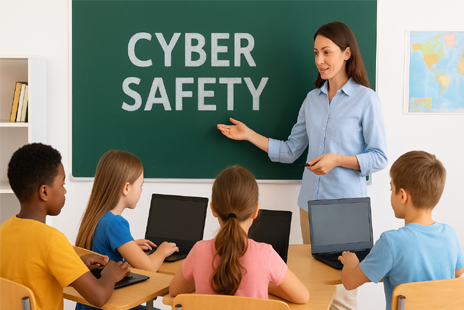
In today’s digital-first world, children are exposed to the internet from a very young age. While it opens doors to learning, creativity, and global connectivity, it also comes with risks like cyberbullying, online scams, inappropriate content, and privacy threats. Parents play a critical role in guiding children, but schools, too, have a significant responsibility in teaching cyber safety.
Why Schools Should Teach Cyber Safety
Schools are not just centers of academic learning—they are places where children learn life skills. Cyber safety is now a life skill as essential as road safety or health education. Since children spend a large portion of their time online for studies, gaming, or social interaction, schools must equip them with the knowledge and habits to stay safe.
Key Roles of Schools in Cyber Safety Education
- Integrating Cyber Safety into the Curriculum
Schools should include online safety and digital literacy topics in their regular curriculum. Lessons can cover secure password management, responsible social media use, cyberbullying prevention, and recognizing online scams. - Workshops and Training Sessions
Organizing workshops with experts, cybersecurity professionals, or law enforcement agencies can help students and teachers stay updated on the latest threats and safe practices. - Creating Awareness Among Teachers
Teachers should be trained to identify signs of cyberbullying, online addiction, or suspicious digital behavior. With the right awareness, they can guide students or inform parents at the right time. - Building a Safe Digital Environment
Schools should enforce safe internet practices within their networks, such as content filtering, monitored usage, and digital code of conduct policies. This sets the foundation for responsible use. - Engaging Parents in Cyber Safety
Cyber safety education should not stop at school. Schools can conduct parent meetings and awareness programs to bridge the gap, so that children get consistent guidance both at home and in school.
Benefits of Teaching Cyber Safety in Schools
- Prevention of Cyberbullying: Students learn how to respond to or report bullying online.
- Responsible Digital Citizenship: Children understand the long-term impact of their online behavior.
- Stronger Parent-School Partnership: Parents and schools together build a safe online environment for children.
- Preparedness for the Future: As digital technology evolves, students develop resilience and adaptability to new threats.
Conclusion
Cyber safety is no longer optional—it’s a necessity. Schools, alongside parents, play a vital role in shaping children into responsible and safe digital citizens. By teaching cyber safety, schools ensure that children not only excel academically but also navigate the digital world with confidence and caution.